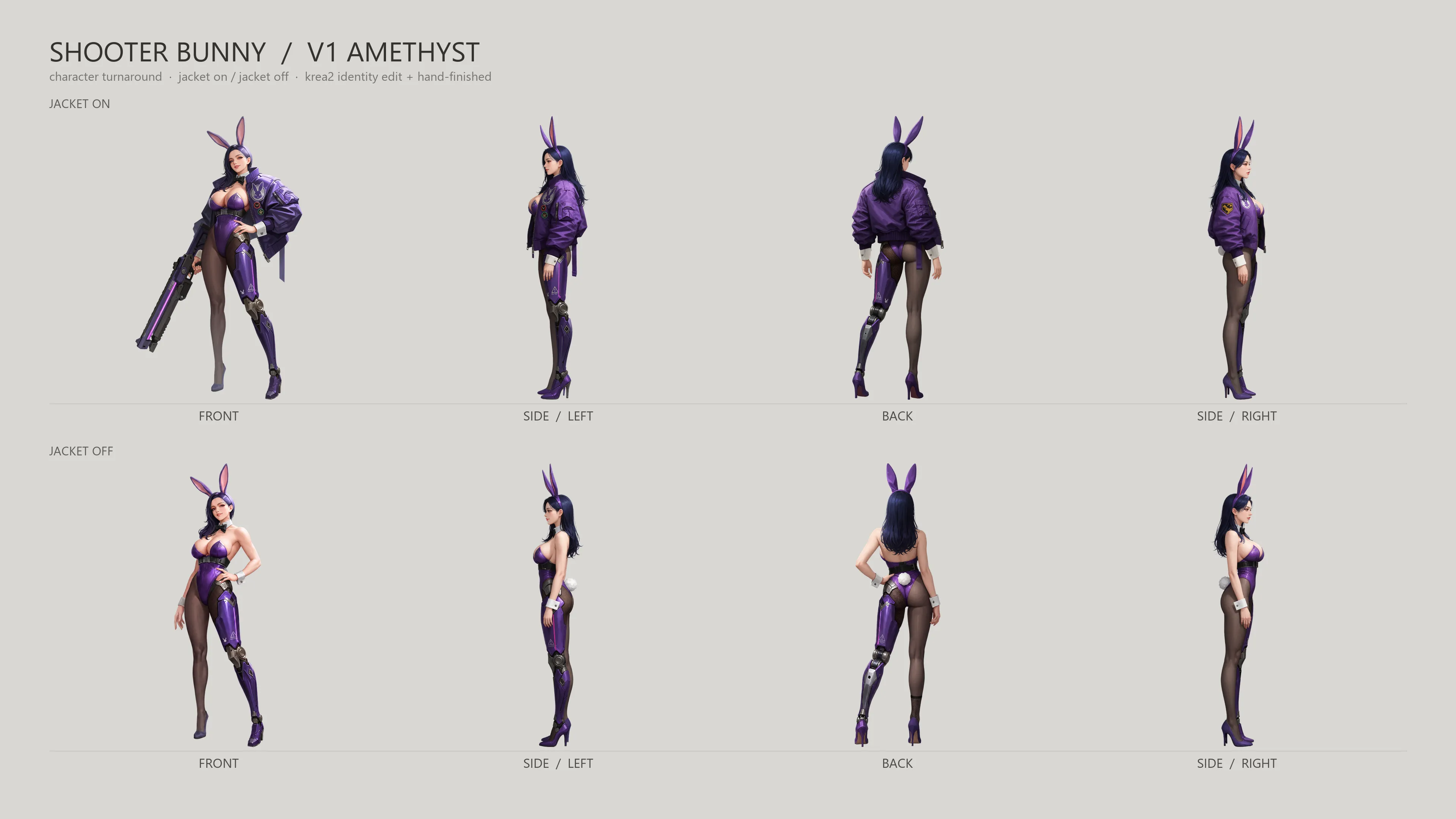
One image in — that is the whole workflow
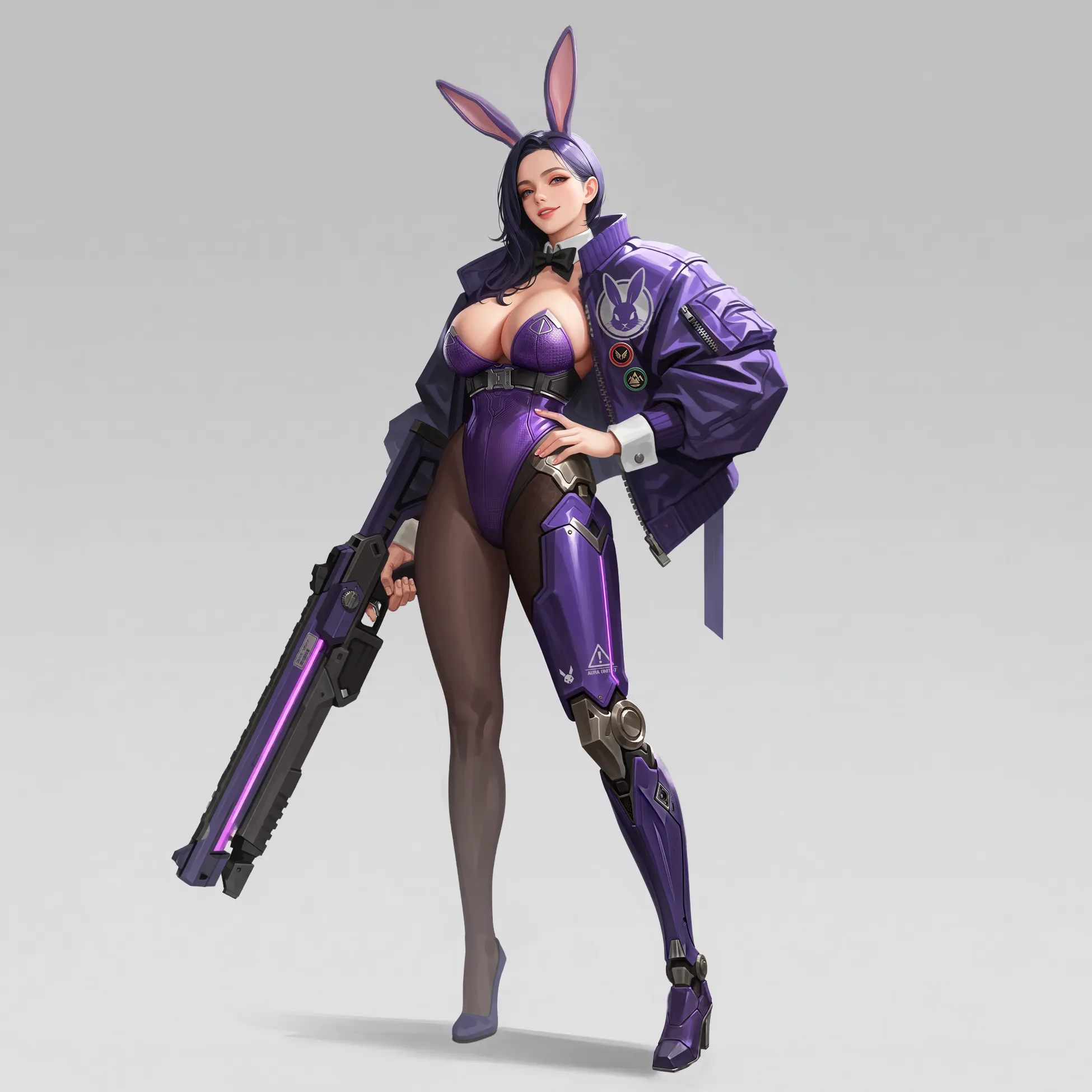
You give the pipeline exactly one front-facing character illustration. That is the
entire input. One queue later you have the left profile, the back, the right profile,
up to two further rotations, and a stitched contact sheet — same costume, same
proportions, same palette, across every camera. No per-view prompting, no manual
rotation, no cleanup between angles: the finished deck below was produced from the
single image loaded in the top-left node.
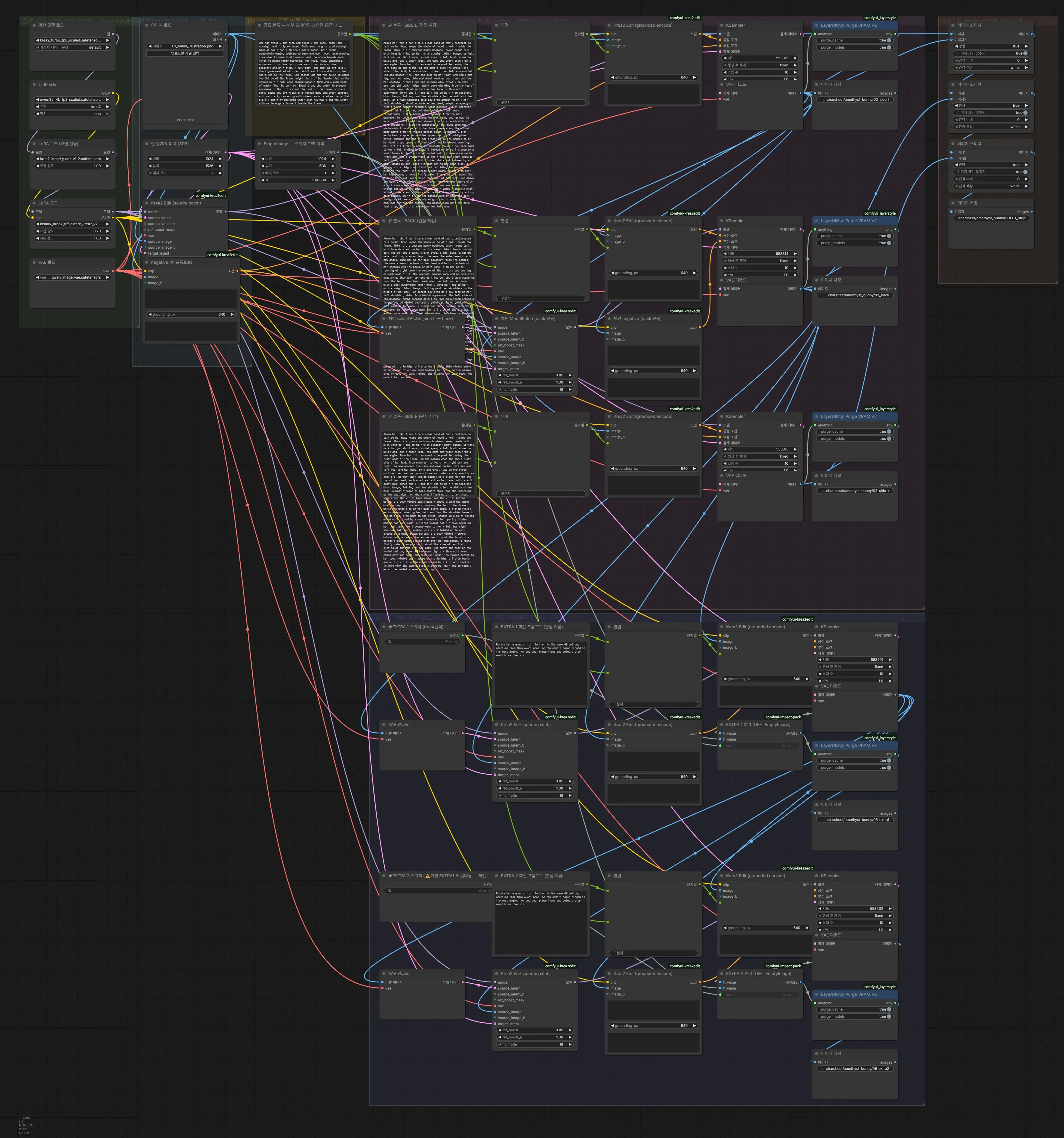
The one-queue graph
Everything runs as a single fan-out graph on the same identity-preserving edit engine
as the Gunmaker, ported from hardsurface to the human figure. The models load once and
feed every branch. Each view renders, purges its VRAM, and saves — then the strip
assembles itself at the end.
Two details make it production-grade rather than a demo:
- Chained rotation. Each camera turns from the geometrically closest finished
view, never more than a quarter turn per step — the back view starts from the freshly
rendered profile, not from the front. Smaller steps, fewer errors.
- Spare rotation ports. Three fixed views are sometimes not enough for a stubborn
angle, so two extra rotation stages sit behind on/off switches. Off, they cost
nothing — the graph skips them entirely. On, they continue the turn from the last
finished view, up to five rotations from one source image.
The parts table
Views are not prompted freehand. Every component of the design — jacket, harness,
prosthetic segments — lives in one table as color + position + size, tagged with
which side of the body it sits on, which plane it faces, and what it covers. Each
view’s sentences are assembled from that table by rule and wired into editable text
nodes on the canvas, so a tweak never means rebuilding the graph.
That structure is what keeps a deliberately asymmetric design honest: left and right
profiles are generated from different part lists, a garment that covers other parts
automatically suppresses them in the views it covers, and small front-facing plates are
dropped from angles where perspective would crush them anyway.
View geometry is a contract
A camera definition can quietly contradict itself — and when it does, the symptom looks
like a missing part, not a wrong camera. So the pipeline treats view geometry as a
checked contract: a left profile means the figure faces screen-left, and a rear view
means left and right swap on screen. Instead of trusting automated symmetry metrics,
each run ends with a per-view QA checklist for exactly these checks — the judgment
stays with the artist.
Assembly is not concatenation
Views that come out of the same pipeline still differ: background tones drift, figure
heights vary, and cast shadows cling to the feet. Final assembly extracts each figure
with a learned matting model — Photoshop’s background removal, driven automatically
over a local bridge — normalizes everyone to a common figure height on a shared
baseline, and refuses to build if any two cells contain effectively the same image.
Cutouts older than their source view are invalidated automatically, so a re-rendered
view can never ship with a stale silhouette.
Guarded hand-off
Every finished batch registers itself into the studio archive with its full prompt —
no manual bookkeeping. The hand-off is gated twice: filenames must be unique across the
batch, and the archive row count is compared against the files on disk. Silent
overwrites don’t pass.
Result
Two published works in the ART section came out of this pipeline: the
Shooter Bunny Amethyst sheet — two outfit variants ×
four views on one deck, plus the weapon sheet from the Gunmaker — and the
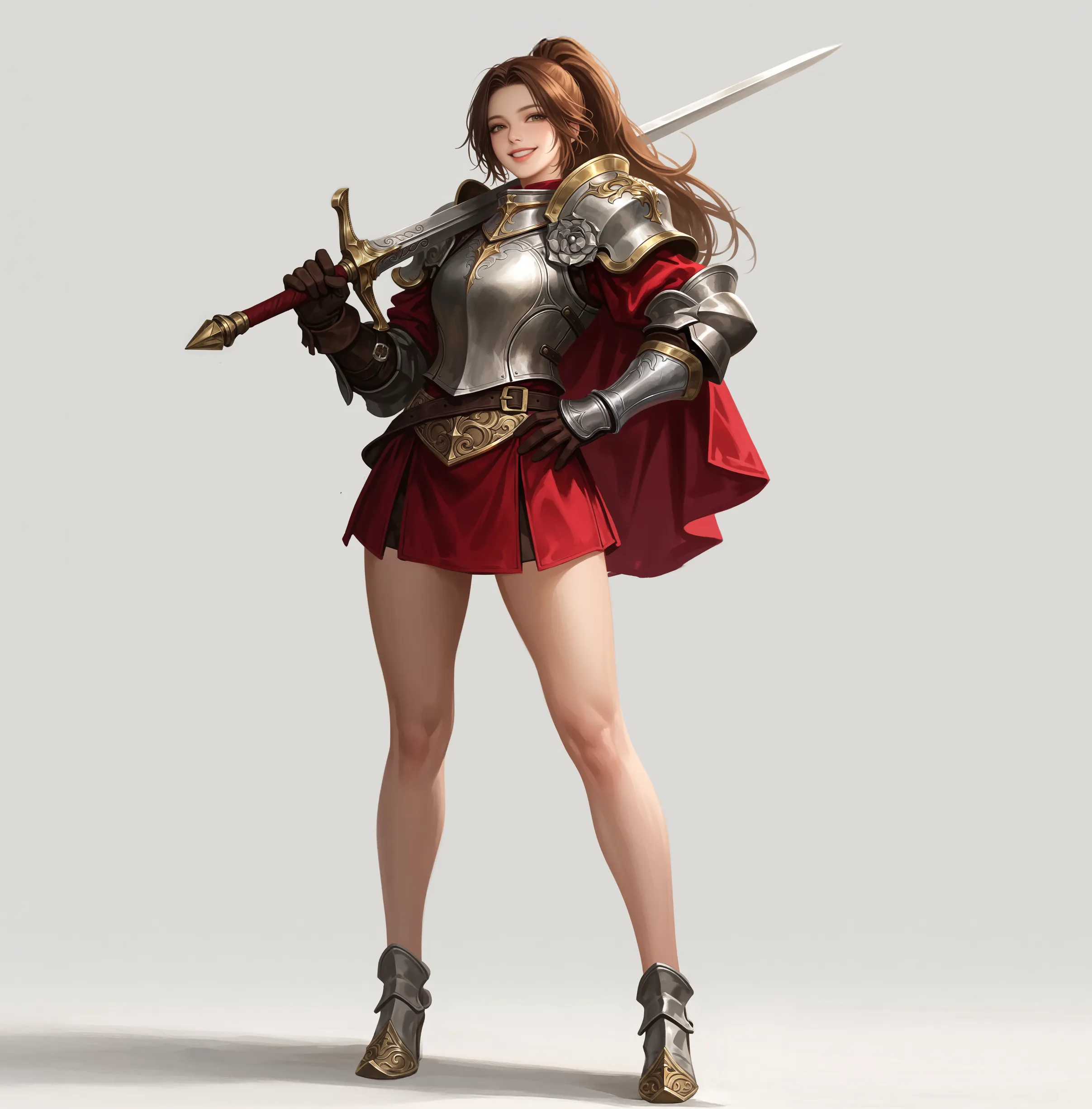
Triumphant Blade Dancer turnaround, the pipeline’s
first full run. All local, zero paid calls.